Open
A driver nearby saw open space. The number is how many spaces they reported.
Public parking, shared by drivers
Spotlert lets drivers share open street parking in real time. See recently reported spots nearby, share one when you leave, and help keep the map current.
The map is free with a Spotlert account.
Prefer a private group? Create or join one →
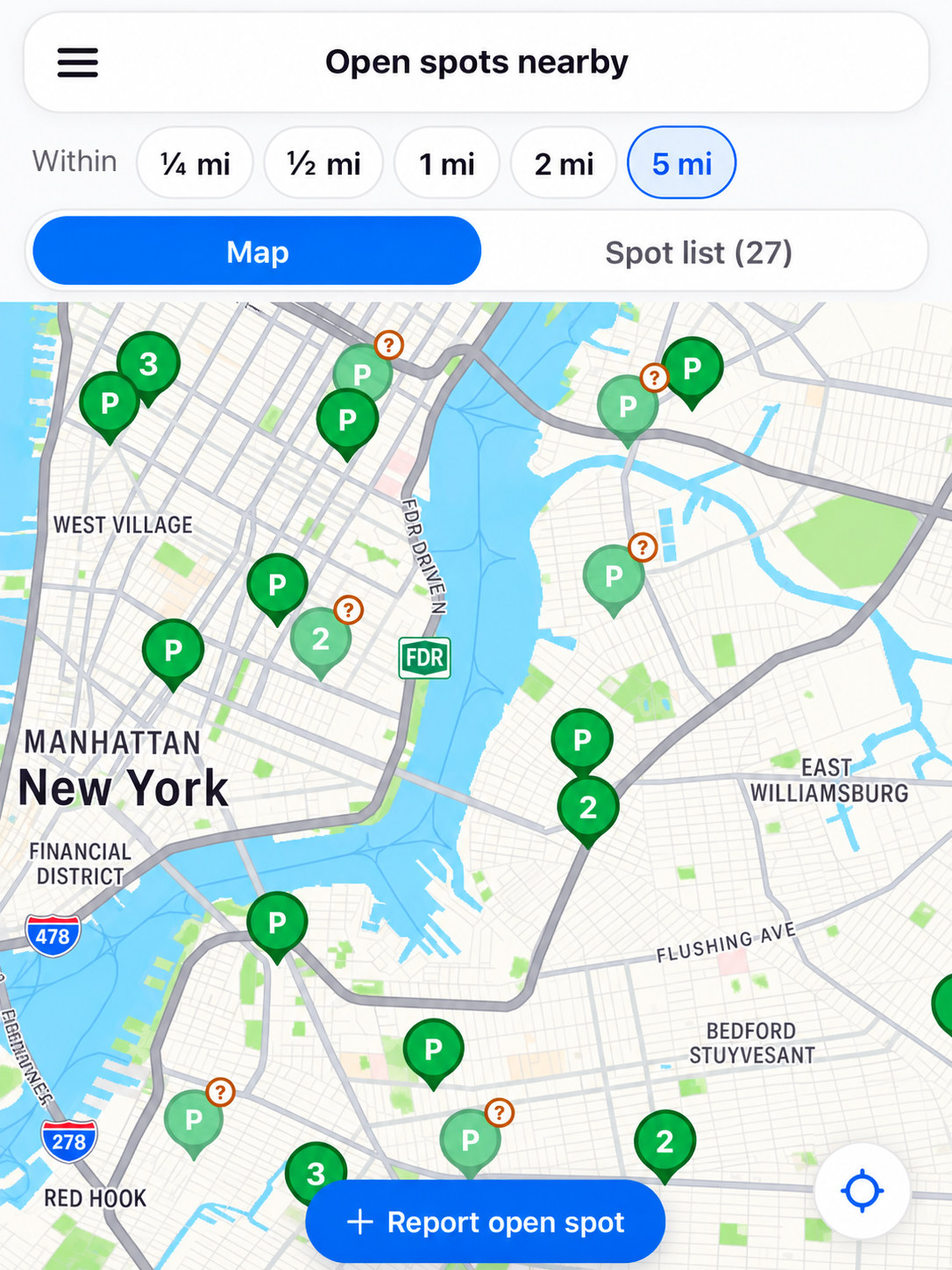
Every spot is a report from a driver who saw it. Here is what you will see.
A driver nearby saw open space. The number is how many spaces they reported.
The report is getting older and nobody has confirmed it recently, so the space may already be gone.
Each spot says when it was reported or last confirmed as still open, and old reports leave the map on their own.
When a driver taps I got this spot or No longer available, the spot leaves the map.
Circling the block wastes time, fuel, and patience, and you never know which street will have space.
By the time you drive past, the spot you heard about may already be gone.
Every driver pulling out knows a space just opened. That knowledge usually leaves with them.
Spotlert turns those observations into a shared public map — so the next driver has a better idea where to look.
Spotlert opens on a public map of open street parking near you, shared by other drivers. You don’t need to join a group to use it.
Pulling out, or passing an empty space? Put the pin on the curb and share it. Sharing needs a verified email, and Spotlert checks your location to make sure you’re nearby.
Drivers near a spot can tap Still open, I got this spot, or No longer available, so the map shows what’s really there.
A new report shows as open for a short while, then as “Possibly still open”, then disappears automatically. Nothing stays on the map for long.
Your reports show your public name — first name and last initial unless you change it — or “Spotlert driver” if you’d rather stay anonymous.
Private parking groups
A private group is an invite-only parking map for a block, a building, a neighborhood or any community. Only approved members see its spots, group reports never appear on the public map, and asking someone to hold a spot is a favor only group members can ask.
A private group is an invite-only map for a block, a building, or any community that wants its own. Start one, join with an invite code, or ask to join a group that can be found by name. Groups are optional — the public map works without one.
Only approved members see a group’s spots, and they never appear on the public map. A group admin draws the group’s parking area on the map, and every group report stays inside it.
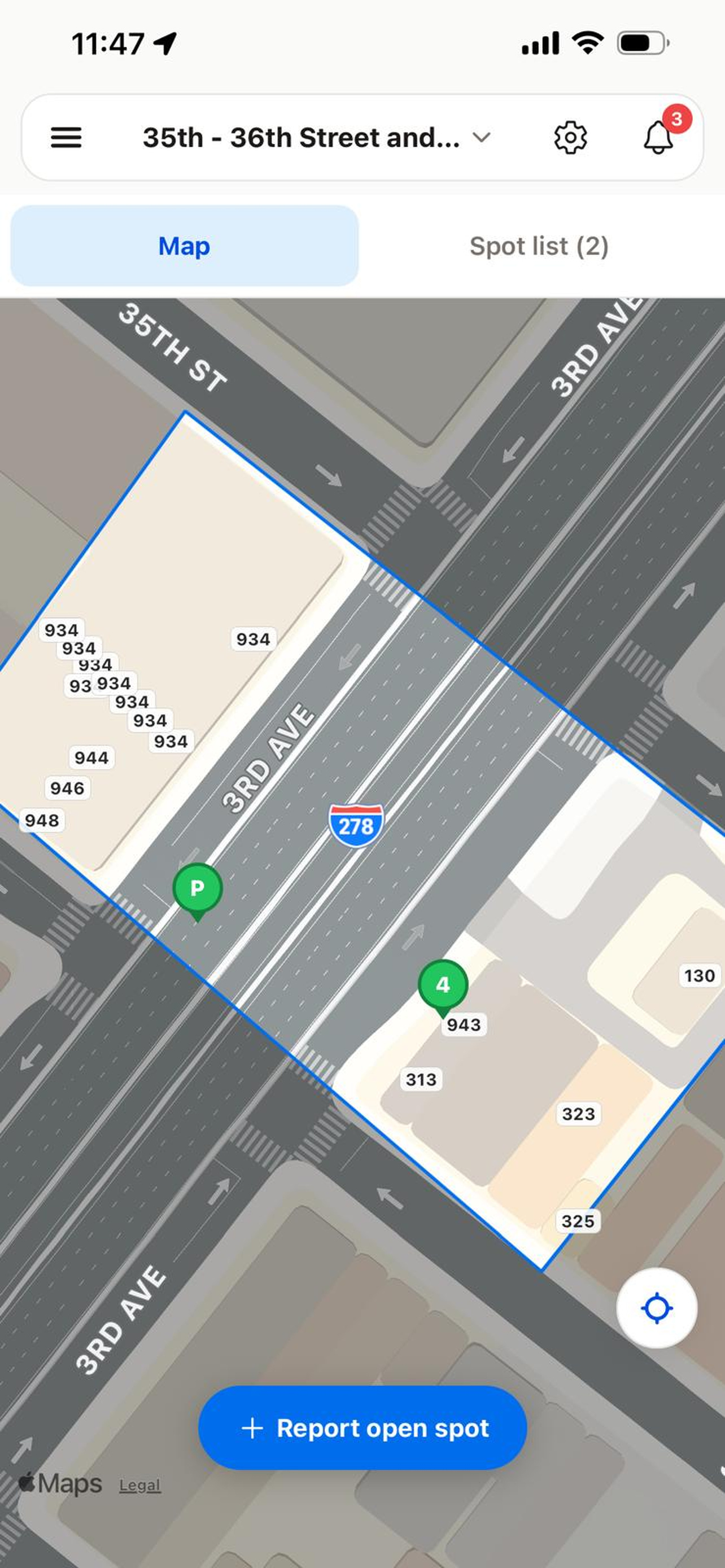
See an opening on your block? Tap Report open spot on the group map and put the pin on the curb. Spotlert checks the pin is on a street inside the group’s area, and members can get a notification about the new opening.
Members tap Confirm open or Mark taken, and can change how many spaces are left. A couple of minutes away? Ask the reporter to hold it — holds exist only in private groups, and they’re always a voluntary favor.
Admins approve join requests, give members roles, remove or block someone who misuses the group, and choose settings like approval, whether the group can be found, and whether open reports expire. The owner can hand the group to another admin.
Household vehicles
Save where your household’s shared car is parked so everyone in the household can find it. It is private to household members — never shown on the public parking map, and never shown to a private group.
See how household vehicles work →Save the spot, and add a note like “Level 3, near the elevator”.
One tap tells the household who has the car right now.
A shared list for oil changes, inspections, and registration.
Get the app
See open spots near you, share one in a few taps as you pull away, and keep your groups and household in your pocket.
Open the public map to see recently reported spots nearby.
Want invite-only sharing for your block or community? Create or join a private group →
Spotlert does not reserve parking and cannot guarantee that a reported spot is still available when you arrive. Spots are reported by drivers in good faith. Holds exist only inside private groups and are always voluntary and informal. Every driver remains responsible for following local parking laws, signs, meters, hydrants, and driveway rules.